Alessandra Meldolesi
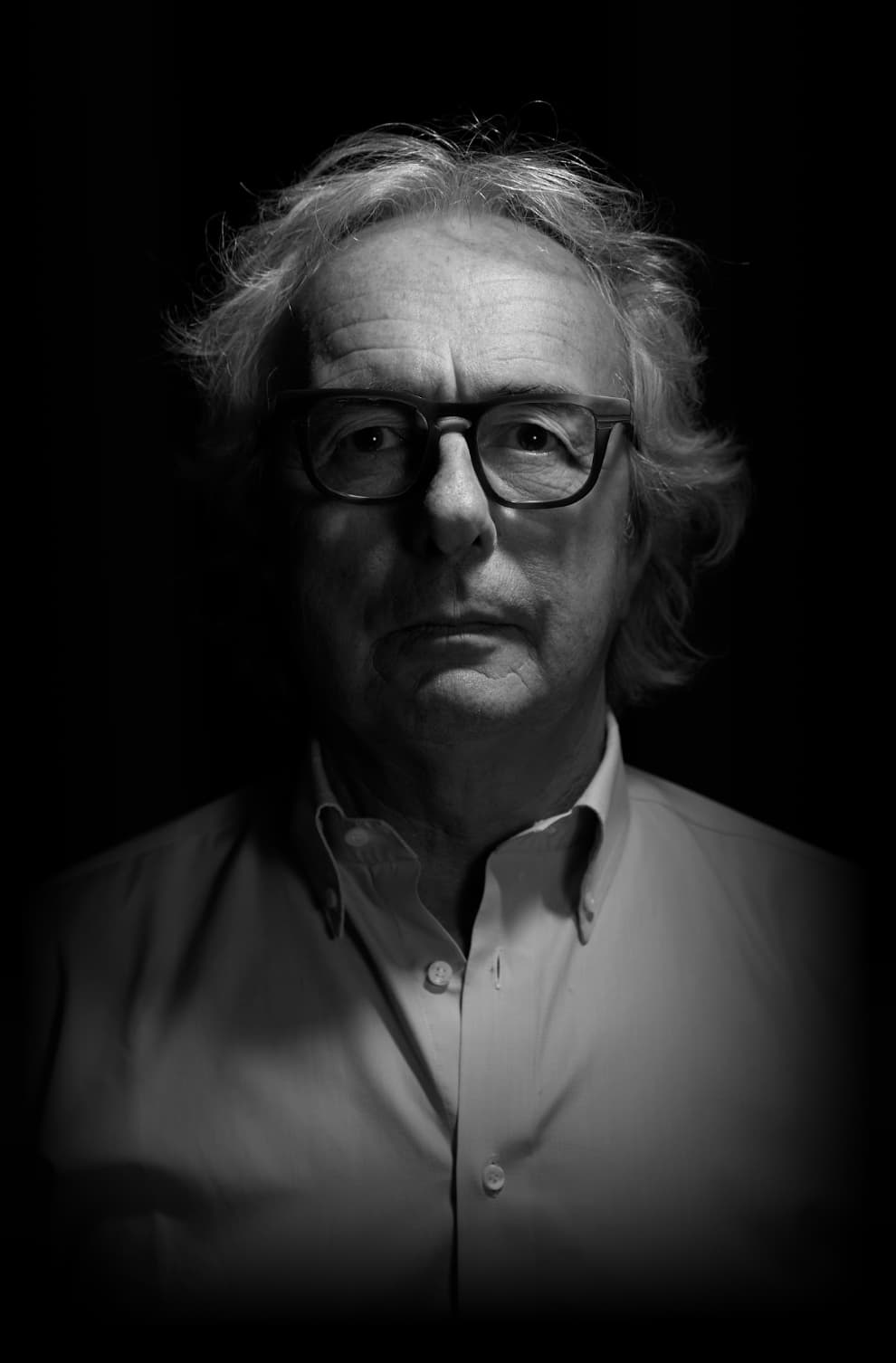
I meet Claudio Cerati at the Collecchio facility, between a cut, a weigh-in and a smoking session. He is as excited about his salmon as he was on the first day, when it seemed destined to remain only a private passion. “Because this is a love story before it is a business,” he says. His bold entrance changed the sector, even though few would have bet on him at the beginning.
It all began with my passion for cooking, understood as experimentation, invention and the expression of a self-taught person who learns through what he knows and experiences: the recipes he reads, tastings, dishes and pairings that give him satisfaction. That passion led me one day to smoke a salmon for myself, out of curiosity about what would happen. I wanted to rediscover the flavour of the salmon that had been so good and delicate in the late 1970s, but could no longer be found by 2000. It worked immediately, so I began making it for friends as a Christmas gift.
From 2012 onwards, research and experimentation followed one another, and the desire to improve that gift increasingly took over. Every year the recipe was questioned in search of improvements. First came the raw material: I tried every kind of salmon, wild, American and Northern European. Then came the desire to refine the quality and concentration of the smoke together with the curing, in an obsessive search for balance. I did it alone. Only one restaurant waiter explained that fish was cured with salt and sugar for 24 hours before smoking. Everything else came from the desire to play and experiment, and from accepting the possibility of failure, knowing that at worst I would lose one side. It never happened.
Then a restaurateur from the province of Trento, Le Tre Colombe, asked me after the third gift to move into production. At that moment my mind lit up and I told myself: yes, I have to do it. I looked for someone who could make their equipment available for my recipe. Then I set up on my own.
From the beginning, my task was to produce perfectly healthy salmon of superior quality, investing in the health of our company, our colleagues, the environment and the communities in which we operate, and thus contributing to the wellbeing of our customers and ourselves as devoted consumers of our product.
With a completely integrated value chain that guarantees total traceability, we can proudly say that every stage of the Upstream supply chain is transparent. It is an ethical choice and a sign of respect for consumers, who know exactly what they want, buy and taste, and rightly expect to know how and where the salmon was raised, checked, fed, harvested and handled.
I wanted to bring the finest salmon in the world to market after more than five years of closely studying the best producers of both wild and farmed salmon. I concluded that low-density farming in the Faroe Islands is the best possible choice for quality, both for flavour and texture and for consistently guaranteed, certified wholesomeness.
Wild salmon and salmon from low-density farms can both be of outstanding quality. The decisive difference for Upstream is that farmed salmon offers health controls that cannot be replicated in the open sea, where a wild salmon may swim through compromised ecosystems and eat other wild fish whose origin cannot be traced. Upstream continues to monitor possible alternatives year after year, but low-density farming in the Faroe Islands is currently considered the best system for our purpose. This is why Upstream has long worked to explain the value of high-quality farming and challenge the common assumptions that have influenced consumers’ instinctive choices about meat and fish for decades.
Wild salmon are not all of equal quality, quite apart from limitations in quantity. They also have to be processed after being frozen on board rather than while fresh. Experience taught me that processing a frozen product causes losses in texture and colour.
It is raised under a Low-Density Farming System that lets salmon live in ample space and pure, cold, crystal-clear water, moving freely without stress in the natural habitat of wild Atlantic salmon. Broodstock are kept in aquatic environments tailored by water type and flow, temperature and lighting to improve or synchronise ovulation.
Every life stage has its own name: Alevin are newly hatched fish still nourished by the yolk sac; Fry are in a brief transition in which they begin to eat and disperse; Parr have fully absorbed the yolk sac; Smolt are migrating towards the sea, usually between spring and their first winter at sea. Salmon are transferred to the farms during this stage.
Upstream salmon is therefore raised in the Faroe Islands in its natural and naturally preferred environment. Every cycle starts from zero thanks to the all-in, all-out strategy, which completely restores the site after each generation. This protects salmon from possible disease and allows the habitat to rest while the strong North Atlantic currents prepare it for the next generation. Feed contains no animal substances, antibiotics, genetically modified organisms, colourings or other unnatural substances. The feed conversion ratio is among the most efficient in the food sector, with comparatively low CO₂ emissions and a fully integrated salmon value chain.
The salmon is then taken from the cages and transported alive by equipped vessels to the initial processing area. Electrical stunning prevents suffering. Modern equipment identifies and removes the blood in fractions of a second to preserve the quality of the meat. Gutting and immersion in crushed ice follow. The ice-to-fish ratio keeps the ideal temperature around 0 °C and prevents bacterial growth.
Still packed in ice, the salmon is transported quickly in refrigerated containers directly to Parma. The cold chain remains unbroken, guaranteeing freshness and safety. Preserving the salmon’s overall quality depends on carefully managing the entire transport operation, from harvesting to delivery to the consumer.
I regularly visit the Faroe Islands to meet suppliers and to spend time there because they are extraordinary places. It was love at first sight: the product’s quality, flavour, texture, purity, elegance and freshness seemed unequalled by any other production area I had visited. I experienced every stage there, including a night out on a boat and the entire harvesting and processing operation.
I concluded that the Faroe Islands offer perfect conditions for raising healthy, robust Atlantic salmon thanks to the cool, constant sea temperatures. Since 2003, the Faroese Veterinary Model has strengthened controls and improved fish health and welfare standards throughout the islands. Our farm is also certified by the Aquaculture Stewardship Council, the non-profit organisation founded by WWF that works with farmers, processors, retailers, restaurateurs, scientists and civil society to improve certification and labelling and manage global standards for responsible aquaculture.
I began with smoked salmon, prepared entirely by hand in constantly sanitised, closely monitored environments, with remote temperature control for maximum safety. Every side is rinsed in salted water to preserve its sensory characteristics. Our original cure uses a little salt and a little sugar in separate stages, a careful balance designed to protect the flesh’s flavour and softness.
Smoking uses only beechwood from the Emilian Apennines, gathered in the mountains around Parma and selected for its ability to give a gentle smoke that enhances the salmon’s natural qualities. The entire cycle takes place below 20 °C in a purpose-built smoker, with smoke filtration and washing after every cycle so that only the delicate aroma reaches the salmon, never ash or impurities.
Selection, trimming, cutting, packing and storage take place in a clean room with controlled temperature, humidity and air filtration. A cutting specialist assesses every trimmed side and chooses the process that will best express its potential. The result is firm, fleshy salmon with moderate, evenly distributed fat. Its colour is intense solely because of the salt cure.
I later diversified the range after noticing at trade fairs that this extraordinary, very delicately treated raw material naturally offered three different flavours. The final third before the tail has lower flesh and absorbs more smoke and savouriness; the heart of the fillet is sweeter; the belly is delicate and marine. It is a little like the different parts of a ham. We wanted to explain those differences to consumers, and the market asked us for all three cuts and flavours.
We then launched the fresh salmon, frozen at source, and the aged salmon, born from the Parmigiani assumption that everything can be matured. The idea came from a side left in the refrigerator for a while. Tasting it carefully, I realised that the thinner parts had developed a genuinely good flavour. I pushed the experiments further to identify the temperature, humidity and time that would bring the salmon to perfect maturity. Finally, we hung a piece for 60 days as one would a salami, something nobody had done with smoked salmon before. We liked it from the first trials.
Another result of this continuous experimentation is the Platinum Edition, an extraordinary salmon smoked with wood from Scotch whisky barrels and cured with Maldon salt. It will probably open a new range of hors catégorie products, as the French say.
There are many stories, but one is about being Italian in this sector.
For a while I worked with an Irish company. On the first day the production manager sat in front of me, looked me up and down and asked how I wanted to prepare the salmon. I explained my recipe. He replied: “No, that is not how salmon is made. We have been producing it for centuries.” I pleaded with him, without success: “You are mad; Italians know nothing.” In the end, very reluctantly, he agreed to test the recipe.
We met again two and a half days later. As soon as I saw the salmon, I recognised the right aroma. He began cutting slices, but I asked for large pieces. Even more irritated, he tasted it with me. Suddenly his eyes lit up: “You are certainly mad, but we will keep doing it this way!”